
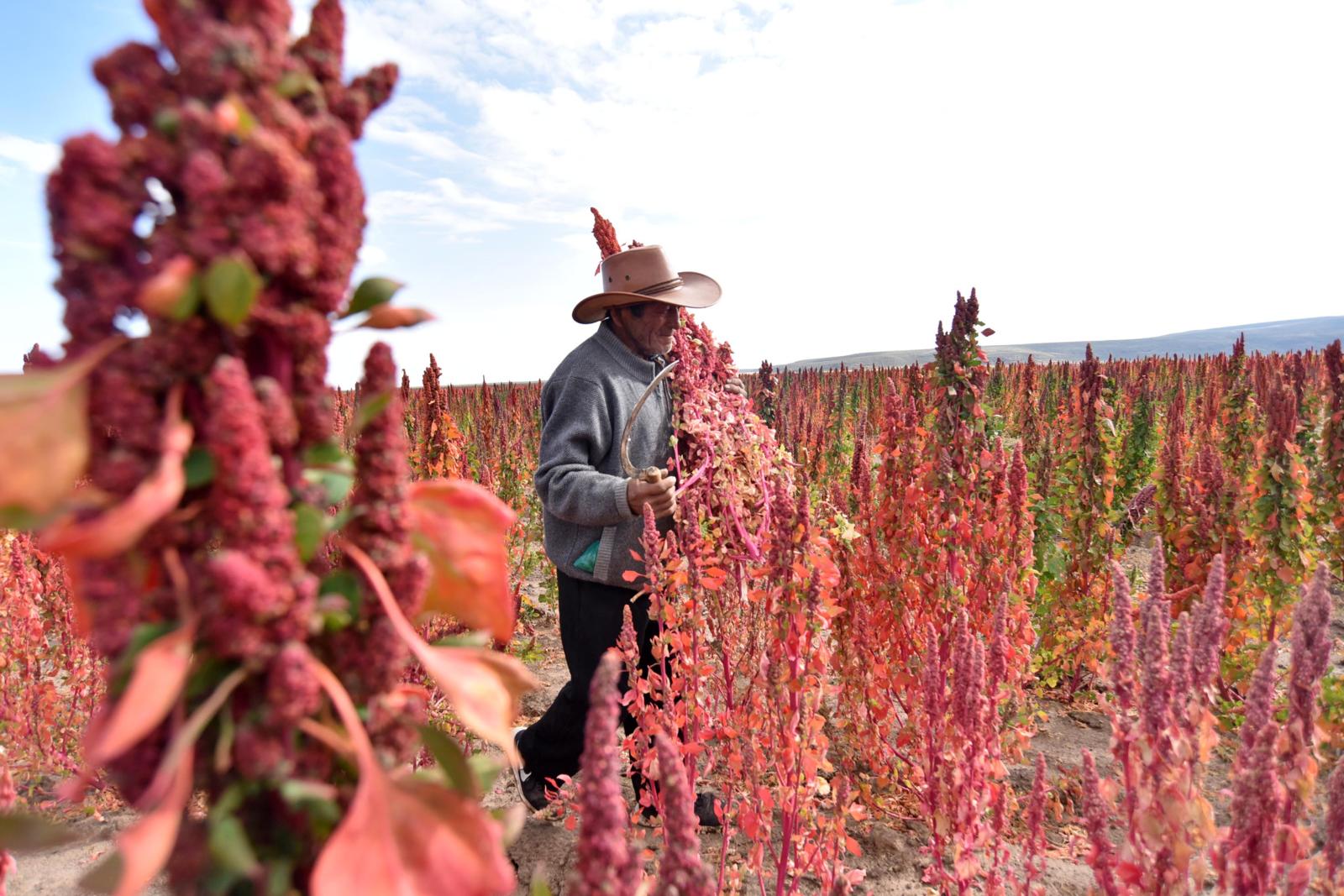
My name is Rodrigo, and I'm an organic quinoa exporter in La Paz, Bolivia. The quinoa we sell doesn't come from a large industrial farm; it comes from family plots in the highlands, where more than forty small producers plant, harvest, and clean the grain under the sun and wind, with a dedication that can only stem from pride in their land. Every payment I receive from abroad isn't just my income; it's the livelihood of dozens of farming families.
For years, our clients in California paid us through international bank transfers. It was a slow process, full of paperwork, but in the end, the money arrived, and I could distribute it among the producers. That's how we kept the entire supply chain alive.
But when the dollar shortage began in Bolivia, everything fell apart. Banks stopped making dollar disbursements, even to accounts denominated in that currency. Now, whenever a SWIFT transfer arrives in dollars, the bank only offers withdrawals in bolivianos at the official exchange rate, which is far below the parallel rate—in fact, it has been roughly half that rate for the past few months, and this discrepancy is likely to worsen in the near future.
This meant that even if my clients sent me dollars, I received devalued bolivianos that weren't even enough to cover basic expenses. I watched as the fruits of so many families' labor were lost in a system that no longer worked. I felt powerless: producers would call me asking when I could pay them, and I had no answers.
There was a moment when desperation drove me to do the unthinkable: I traveled personally to the United States to withdraw the money from my sales and bring it back to Bolivia in cash. It worked, but it was absurd. I spent thousands of dollars on airfare, paperwork, and insurance, and I traveled constantly fearing something would go wrong. It was exhausting, expensive, and dangerous, but I couldn't let the families who depended on me be left without income.
When I was on the verge of suspending exports, through importer friends who were also struggling, I discovered PrismaPay, and honestly, it was like breathing again. With PrismaPay, my clients in California continue to pay in dollars as usual, but the money doesn't enter the Bolivian banking system. PrismaPay receives it in USD, converts it to stablecoins, transfers it to Bolivia, and then converts it back to Bolivianos at the real market value, depositing it into my local account.
If I wish, I can also choose to keep the money in USDC or USDT, securely held with a multi-party computing (MPC) system, the latest in cybersecurity.
The sending and receiving process takes just a few hours, and the fees are minimal. I can track every step in real time, and the team responds to my messages in minutes, any time of day, any day. I don't need to wait in lines, I don't have to fill out endless forms, and my clients don't need to learn anything about blockchain: for them, it's as simple as a bank transfer.
Thanks to PrismaPay, I was able to pay my producers on time again. I could see the peace of mind on their faces when I deposited what they were owed, knowing their children would have food on the table and that they could continue working their land with dignity.
Today, I feel I've regained control of my business, but more than that, I feel I've regained the trust of the people who believed in me when everything seemed to be falling apart.
Without PrismaPay, our quinoa exports wouldn't have survived. With them, we're not just moving forward: we're growing together.
Rodrigo C.