
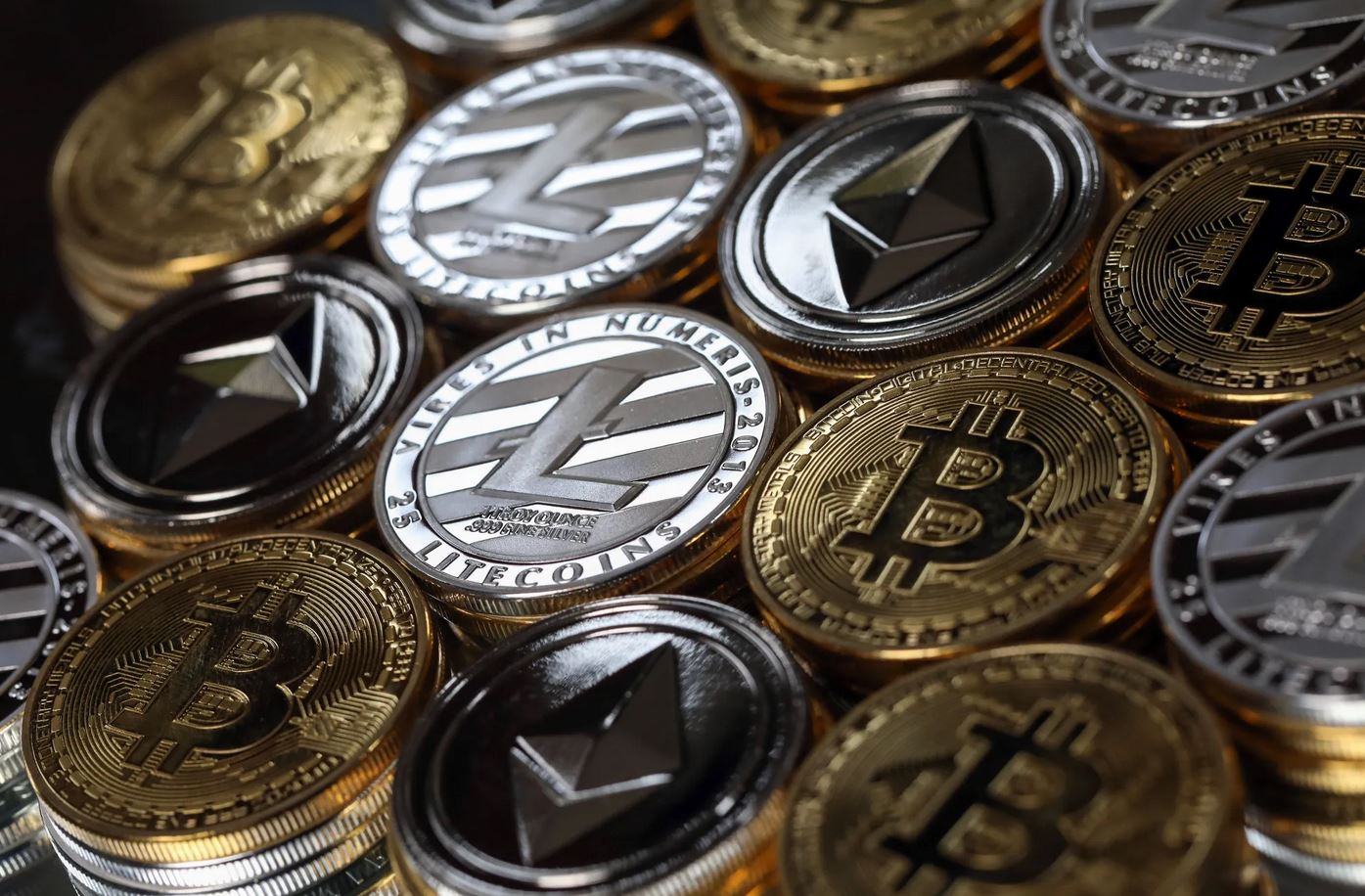
Cryptocurrencies, Bitcoin, tokens, crypto assets, crypto this, crypto that… it's a wave of new terms with a video game-like ring to them that, for some years now, have invaded both the most important financial and technological news and the bland chatter of nephews at Sunday family lunches. Everyone, with their own particular mix of curiosity and aversion to novelty, has a different understanding of what crypto technology means, but its growing ubiquity and the current economic and political volatility of our environment demand that we finally 1) understand what it's all about and 2) decide: are cryptocurrencies trustworthy?
To understand what cryptocurrencies are, it's helpful to know their history, paying attention to their first viable implementation: Bitcoin. Bitcoin was born in 2009, announced and explained in a scientific paper authored by the pseudonym Satoshi Nakamoto. This paper, titled “Bitcoin: A Peer-to-Peer Electronic Money System”, presents a digital money system that utilizes mathematical principles and the computational power of a decentralized network of volunteer servers. To understand this, let's pause and ask ourselves something that may seem obvious but perhaps isn't: what is money?
Money is an accounting object, physical or digital, that holds fungible value and therefore serves to carry out exchanges of goods and services. Fiat money, which is the money we traditionally use (e.g., dollars, euros, bolivianos, etc.), is issued by states through central banks and largely stored by private banks, and its value is determined by the trust placed in the system formed by these entities. Bitcoin is money supported by an alternative system, in which the issuance and storage of funds resides in a computer network governed by a strict protocol, whose security algorithms allocate and maintain the values in users' digital wallets, guaranteeing the effectiveness of transactions and preventing fraud and double-spending (a situation in which the same currency is used twice). The history and status of all accounts and transactions are stored on the blockchain, a shared ledger verified by a vast network of interconnected servers called nodes that perform all the necessary computation for a low cost (paid in Bitcoin). The software that controls this network is public, as is the record of all transactions. However, the identity of wallet owners remains secret because only a numerical code (called a private key) is needed to make transactions.
Finally, the value of each coin is determined by nothing more than supply and demand. Bitcoin is protected against inflation because its protocol dictates a timed and limited production of coins through the computational work of the nodes—unlike fiat currencies, which can be produced at will by their respective governments.
In short, Bitcoin serves the same purpose as fiat money—that is, receiving, paying, and storing value—with the difference that trust in its operation is transferred from the government and banks to the blockchain network. So, which do we trust more: politicians and bankers or a vast network of computers governed by a public and immutable protocol? I think the answer is obvious.
It's no coincidence that Satoshi Nakamoto's famous paper was published in 2009. A year earlier, mismanagement of the American banking system triggered a financial crisis that left millions without savings and jobs. The US government issued trillions of dollars through its "quantitative easing" program and used them to bail out failing banks. Saving or moving money always carries risks, but the truth is, it's more likely that your bank will fail, your piggy bank will be stolen, or the nation-state will collapse than that the blockchain network will fail. The biggest risk with Bitcoin would be its devaluation due to lack of demand, but all indications are that the opposite will happen. Since the network's inception, a Bitcoin has gone from being worth pennies to over $110,000, and its value continues to rise as the world learns about the reliability and usefulness of this technology.
Bitcoin was the first cryptocurrency, but it's far from the only one. Over the past two decades, dozens of blockchains have emerged, each with its own protocol that prioritizes certain needs over others and proposes new features. These new blockchains bring new currencies and new uses. Some, like Solana, stand out for providing the infrastructure to implement software with functions such as near-instant conversion between different cryptocurrencies at minimal cost. There are platforms that convert fiat currency to crypto and vice versa, send money to international destinations both within and outside the blockchain, make investments, or take out loans. The crypto world is dynamic, complex, and brimming with emerging possibilities.
In Latin America, the use of crypto assets—a generic term for a variety of valuable assets that operate on the blockchain—is growing steadily. In Brazil, blockchain technology spearheaded a revolution in interbank payments, and the country has consistently ranked among the top 10 countries with the highest percentage of cryptocurrency users worldwide for several years. In Argentina and Venezuela, stablecoins—cryptocurrencies pegged to a fiat currency (primarily the US dollar)—have provided relief to millions of users facing the hardships of hyperinflation. In Bolivia, the political, economic, and monetary crisis has also generated the need for a currency independent of the central bank and private banks. The Bolivian boliviano devalues unpredictably while the state maintains a fictitious official exchange rate, resulting in a lack of dollars for purchases and banks preventing withdrawals and transfers of dollars abroad. Cryptocurrencies have emerged as an ideal solution to these circumstances, and thanks to the creation of local fintech (financial technology) companies and the implementation of reliable software, this solution is now accessible to everyone. It's no coincidence that, according to a recent Latam Rankings survey, the number of cryptocurrency users in Bolivia increased by 355% in the second quarter of 2025 alone.
Historically, Bolivia has been slow to embrace technological revolutions—credit cards, the internet, smartphones, etc.—likely due to a combination of cultural and economic factors. However, current circumstances have prompted Bolivia to strive to catch up with its neighbors and the rest of the world in the realm of cryptocurrencies. After all, there is no doubt that, collectively, the sooner a country adopts them, the better it will be able to navigate the global economy. Individually, those who take advantage of them first will have a significant advantage over others when managing their finances. Interestingly, due to the aforementioned regional circumstances and its less structured financial systems, Latin America—both ambitious and adaptable—is not only adapting to the revolution but is also developing a profile as a leader in technological and regulatory innovation within the crypto world.
Enzo Malky