
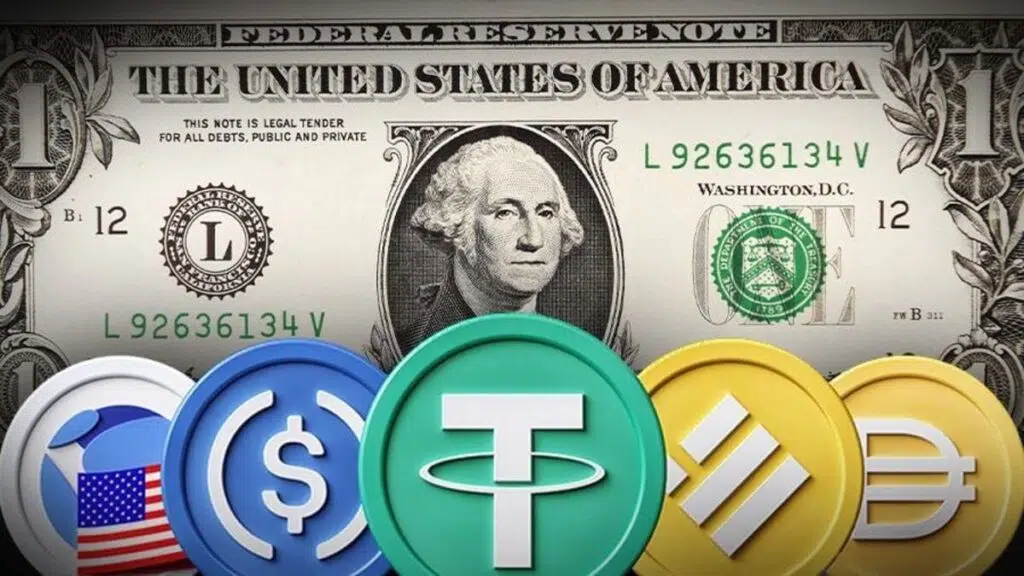
Until a couple of years ago, the exchange rate for the dollar in Bolivia was so fixed it seemed like one of those statues in a public square: immovable, immortal, and, for many, almost invisible. If you needed to buy dollars, you went to the bank or a currency exchange, completed the transaction, and that was it. Nobody talked about a parallel or "blue" dollar like in Argentina. But as with all economic stories in Latin America, the calm doesn't last long: in recent years, Bolivian exchange rate stability has been shaken, and the parallel market has emerged with force.
Today, the parallel dollar is a hot topic of conversation in taxis, cafes, and WhatsApp groups. Why did this happen? What consequences did it bring? And how did technology—with stablecoins like USDT and USDC—become a lifeline for many Bolivians and businesses that need to move their money abroad?
Let's take it one step at a time.
A Fixed Exchange Rate for Over a Decade
For years, Bolivia maintained a fixed exchange rate system, with the official rate at 6.96 bolivianos per dollar. This model provided a sense of stability, which was very attractive in a continent where local currencies tend to fluctuate against the dollar.
The government was able to sustain this parity thanks to a favorable context: high natural gas prices and a cushion of abundant international reserves thanks to the capitalization of natural resources by previous administrations. For over a decade, exchange rate stability was one of Bolivia's economic hallmarks.
The Current Monetary Crisis in Bolivia
Sadly, times change, and the Bolivian government's mismanagement has begun to take its toll. Gas exports slowed, international reserves began to dwindle, and the Bolivian economy began to feel the pressure of a growing fiscal deficit.
Suddenly, banks found themselves with fewer dollars available, the Central Bank began rationing foreign currency, and ordinary citizens began to suspect that this “eternal stability” wasn't so eternal after all. It was the perfect breeding ground for a parallel market to emerge.
The Birth of the Parallel or Blue Dollar
In 2023, when access to the official dollar became increasingly difficult, people sought alternatives https://www.bbc.com/mundo/noticias-america-latina-65171402 'Noticia de aquel año'). This is how the parallel dollar emerged, also called the blue dollar by analogy with Argentina.
📌 Fun fact: the term blue dollar originated in Buenos Aires around 2011, when currency restrictions—the infamous “cepo”—led people to buy and sell dollars outside the official system. Some say the name comes from the connection between the word “blue” and the black market (black market → blue market), others maintain it has to do with the color of the counterfeit bills detected at that time, which glowed blue under ultraviolet light. Still others say the term comes from the blue stripe that distinguishes the new one-hundred-dollar bills. Whatever the explanation, the term became popular, and today it is also used in Bolivia.
In Bolivia, the parallel dollar started tentatively, but with the lack of foreign currency in banks and exchange houses, it is now practically the only dollar available. The exchange rate fluctuates wildly, having reached 18 bolivianos per dollar and currently hovering around 13 bolivianos per dollar, almost double the official rate. Furthermore, there are times when dollars are simply unavailable at exchange houses.
Banks Without Dollars or Transfer Capacity
One of the most alarming symptoms of the crisis is that banks can no longer provide cash dollars to their clients as easily as before. Nor can they guarantee international transfers through the SWIFT system.
This creates a huge bottleneck for companies that need to import, for families with obligations abroad, or simply for those who want to save in a more stable currency. The promise of “you can withdraw dollars whenever you want” is no longer fulfilled.
The Growth of Stablecoins in the World and in Bolivia
While the traditional financial system stagnates, in the rest of the world, stablecoins—cryptocurrencies pegged to fiat currencies—have become a serious and increasingly popular alternative.(https://es.wikipedia.org/wiki/Criptomoneda_estable 'Wiki de Stablecoins')
Globally
In developed countries, such as the United States and Europe, stablecoins serve as a liquidity mechanism in cryptocurrency markets, allowing traders to move between assets without needing to access the banking system. However, in countries with monetary instability, they play a much more transformative role: they become digital dollars accessible to anyone with a cell phone and an internet connection.
Cases like Argentina, Turkey, Venezuela, and Nigeria show the same trend: citizens are adopting stablecoins not to speculate, as is often the case with other types of cryptocurrencies, but to protect their savings, receive remittances, or send money abroad. Speed, transparency, and low costs are driving organic adoption.
Today, the global stablecoin market exceeds $120 billion in circulation, with USDT and USDC dominating the scene.
In Bolivia
In Bolivia, adoption was initially slow, partly because the country maintained legal restrictions on cryptocurrencies until very recently. However, the currency crisis pushed many to seek alternative ways to obtain dollars, and the government adopted a more open stance on the matter. More and more Bolivians are using stablecoins such as USDT and USDC in peer-to-peer markets or through fintechs (financial technology companies), because they represent immediate access to a “digital dollar” when physical dollars are scarce.
The key is that stablecoins not only serve to save, but also to transfer value internationally without going through banks. This opens a huge door for companies and individuals who need to move money securely and quickly. Because of the opportunities offered by stablecoins in a context like Bolivia, Bolivia leads the adoption rate of cryptocurrencies in Latin America, with an increase in users of more than 350% in the second quarter of 2025 alone.
What are USDT and USDC and how do they work?
USDT (Tether)
USDT is the most widely used stablecoin in the world. It was created in 2014 by the company Tether and is backed by dollar-equivalent assets (cash reserves, bonds, etc.). Its promise is simple: 1 USDT is always worth 1 dollar. It operates on multiple blockchains, making it extremely liquid and flexible.
USDC (USD Coin)
USDC, created by Circle and Coinbase, was launched in 2018 and quickly gained prestige for its transparency. Each USDC is backed 1:1 by US dollars in an American bank, and the company publishes regular audit reports. It is considered by many to be the gold standard of reliability in the market.
Both USDT and USDC function as “digital bridges”: a person can convert their local currency into these and send it abroad in minutes, where it can then be converted to the local fiat currency. The entire process avoids the obstacles of the traditional banking system.
Bolivian Fintechs
This is where companies like PrismaPay.net come in. PrismaPay.net not only uses USDT and USDC as its technological tool, but also provides a bridge between stablecoins and fiat currency in different countries.
In practice, this means:
-
The user in Bolivia deposits Bolivianos.
-
PrismaPay converts these funds into stablecoins (USDT or USDC).
-
Through its network of international payment channels, PrismaPay transfers these stablecoins to the destination country.
-
There, PrismaPay converts the USDT/USDC back into local fiat currency (dollars, euros, pesos, etc.) and deposits it into the recipient's account.
In this way, PrismaPay achieves something Bolivian banks cannot:
-
Sending money abroad in as little as 1 hour.
-
Minimizing costs.
-
Eliminate waiting lists and amount restrictions.
-
Provide a 100% digital, real-time traceable experience.
-all this without either the sender or the recipient needing to manage crypto wallets.
In other words, PrismaPay transforms stablecoins into a tangible and extremely efficient solution. Thanks to this model, any person or business in Bolivia can send money abroad and receive it in the currency they need, without depending on the availability of dollars in local banks.
Conclusion
The history of the dollar in Bolivia has gone from the absolute calm of a fixed exchange rate to the uncertainty of the current monetary crisis and the expansion of the parallel dollar. Amid this chaos, Bolivian citizens and businesses found a practical, modern, and reliable solution in stablecoins.
USDT and USDC are not just digital currencies: they are the evolution of the dollar, a mechanism that allows for the global transfer of value without obstacles or delays. And companies like PrismaPay.net prove it every day: by using stablecoins as their infrastructure, they allow users to receive fiat currency in Bolivia and disburse fiat currency in another destination country quickly, at low cost, and without restrictions. The monetary crisis, although still presenting challenges, no longer has to be the insurmountable obstacle it was initially feared to be.
Sofia Lara