
For any finance or administration team in Bolivia, limited access to traditional foreign currency is not a theoretical variable but a constant operational challenge. When the usual banking channels drag out the processing of international remittances, the capital accumulated in local currency is exposed to a significant opportunity cost. In this environment, structuring a reserve fund in stable digital assets (such as USDT) offers an efficient currency hedge—provided you understand the technical mechanisms that guarantee its security, custody, and settlement.
The case of the medical supplies importer in Cochabamba
An importer and distributor of active pharmaceutical ingredients in Cochabamba, which supplies local laboratories for medicine production, experienced this operational need for a hedge. Its planning calls for monthly purchases of chemical inputs from laboratories in India and Germany worth an average of $60,000.
Because of the rigidity of the manufacturers' schedules, any delay in payment results in the loss of the production slot, pushing the final delivery back by as much as sixty days. The local company kept its cash reserves in Bolivianos, waiting for its bank to allocate dollar quotas. When the allocation times exceeded three weeks, the packaging line came to a halt and caused local shortages.
To solve this vulnerability, the finance team decided to restructure its treasury using digital dollars (USDT). By channeling its flows through Prismapay, the company began progressively converting its Boliviano surpluses into USDT, keeping a reserve fund equivalent to sixty days of international purchases directly in its digital payments account. This way, when the supplier notifies that the batch is ready, the transfer is ordered and settled the same day, regardless of the physical availability of foreign currency at traditional local institutions.
Security and custody infrastructure: MPC and Fireblocks
The first requirement of an IT or internal audit department when evaluating the use of digital dollars is to validate the security of the stored assets. Holding corporate treasury reserves on a blockchain demands institutional-grade custody infrastructure, far removed from the risks associated with the single private keys or traditional "seed phrases" used at the retail level.
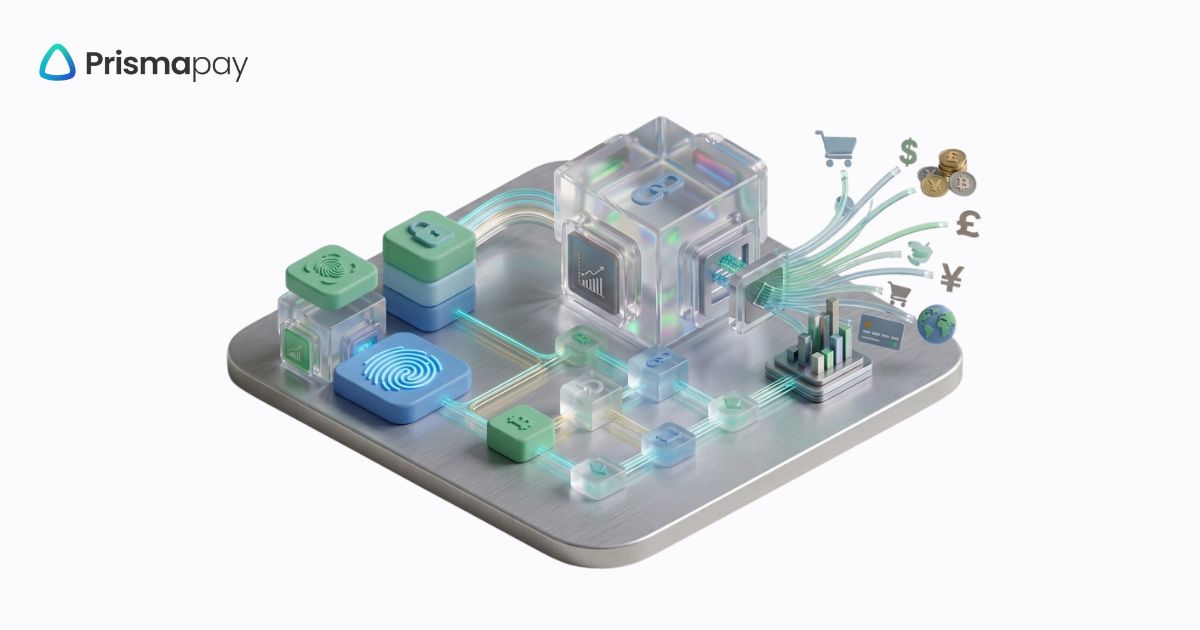
Prismapay solves this challenge by integrating MPC (Multi-Party Computation) technology through Fireblocks, the security standard for digital asset custody used by international banks. This custody technology eliminates the risk of security vulnerabilities by splitting the access key into multiple digital signatures distributed across independent servers.
When the company authorizes a payment, the system validates the transaction through these independent signatures automatically, ensuring that no one has access to a single, centralized key to move the funds. This makes the infrastructure highly resistant to attacks aimed at a single server or access credential.
At the infrastructure level, the platform handles the technical complexity of the network invisibly to the user. This means the treasury department does not need to select blockchain networks or pay gas fees directly. Prismapay processes the transfer by choosing the fastest network at that moment and absorbs all processing costs, delivering the converted funds in traditional currency directly into the foreign supplier's bank account. In this way, the platform resolves both currency and technological complexity behind a simple, secure corporate interface.
The hybrid treasury strategy: BOB and USDT
Conservative financial management in our market recommends implementing a hybrid treasury structured under weekly rebalancing rules based on operational cash flow:
- Operating liquidity in Bolivianos: keep in local banking the capital needed to cover the immediate commitments of the current month, such as payroll, utilities, domestic taxes, and local suppliers in local currency.
- Import reserve in USDT: allocate cash surpluses to acquiring USDT through the platform, building a reserve equivalent to 60 or 90 days of projected imports. This capital stays dollarized, protected from devaluation risk, and available for immediate transfer 24 hours a day.
As local collections generate flows in Bolivianos, the treasury transfers the surpluses to the digital payments account each week. This constant rebalancing makes it possible to average the cost of acquiring foreign currency and continuously mitigates the currency exposure of the local-currency cash position, ensuring that the company has the digital-dollar liquidity it needs to react to any purchasing opportunity abroad.
Operational autonomy without intermediation
Using stablecoins for treasury management represents an infrastructure optimization. By decentralizing a portion of the company's reserves onto instant-settlement rails, the finance team regains control over payment timing and inventory predictability. The hybrid treasury makes it possible to operate under current Bolivian compliance standards while protecting working capital from cycles of currency scarcity.
Would you like to evaluate a hedging plan tailored to your company's technical and financial profile?
Prismapay — corporate banking for your company.