
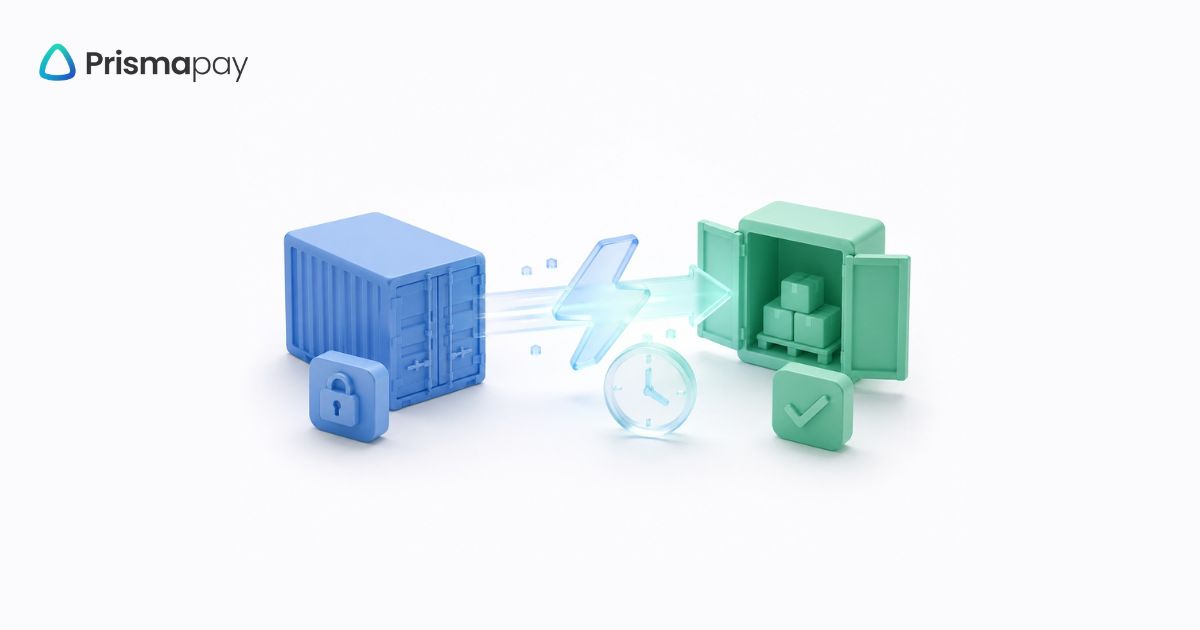
At international ports, every day a container sits held up waiting for payment confirmation translates into storage fines and demurrage that ripple through the entire local distribution chain.
Imagine it's Sunday afternoon and the freight agent warns you that your shipment of industrial equipment is consolidated at the port of Houston, but if the transfer confirmation isn't credited to your account before 8:00 AM Monday, the container will miss the only sailing scheduled for the month. At that moment, the rigidity of conventional banking hours becomes an insurmountable wall, threatening to bring your operations to a halt for weeks.
The urgency at the port of Houston and the project in Santa Cruz
This was the real predicament faced by the manager of a renewable energy company in Santa Cruz de la Sierra that installs industrial solar plants. The company had committed to an electrification project for an agribusiness in the northern part of the Santa Cruz region, with severe penalties for each day of delay in delivering the work.
The heart of the project—a batch of next-generation hybrid inverters and lithium batteries valued at $52,000—was sitting in the warehouses of the port of Houston, Texas. The U.S. manufacturer, located in that same port city, had set a strict commercial policy: it would not release the Bill of Lading until the corporation's finance department could see the funds credited to its checking account.
The Bolivian manager received the supplier's warning on Sunday at 7:00 PM. Through the conventional banking circuit, a solution was unfeasible, since the local offices wouldn't open until Monday morning and a transfer via the traditional SWIFT system would take three to five business days to process and pass through the correspondent banks in New York.
For the Santa Cruz company, missing that vessel meant a month's delay in the arrival of the supplies, which would trigger a contract breach penalty of $2,000 per week with its agribusiness client, on top of the daily storage and demurrage costs at the U.S. port, estimated at $180 per day. Added to these charges were chassis fees and the late-cancellation penalties charged by the inland trucking company in Texas, amounting to an additional $400 for each rescheduling of the cargo pickup at the terminal. On top of that, the delay would have left the crew of engineers and assembly technicians idle at the project site in Bolivia, whose field per diems and mobilization wages were already covered and represented unrecoverable losses.
Resolution in fifteen minutes via the RTP network
Faced with the risk of delay, the importer decided not to use conventional banking and turned to Prismapay's international payments platform. On Sunday at 10:45 PM, he logged into his digital payments account, converted the Bolivianos to USDT at the exchange rate locked on screen, and sent the funds to the U.S. manufacturer's checking account at JPMorgan Chase bank in New York.
The platform processed and converted the transaction instantly, sending the final payment directly to the destination account through the United States' real-time payments network (RTP), without going through the slow intermediaries of traditional banking.
At 11:05 PM on Sunday, the transaction was successfully settled. The manufacturer in Houston received the deposit confirmation in its checking account in less than fifteen minutes, which allowed the sales manager to sign off on the customs release of the cargo first thing Monday. The container made it onto the vessel before the gate cutoff, and the project in Santa Cruz was able to proceed on schedule. This speed avoided costly penalties and protected the distributor's commercial reputation.
What is the RTP network and how does it eliminate weekend delays?
The Real-Time Payments network represents one of the biggest modernizations of financial infrastructure in the United States, designed specifically to address the shortcomings of traditional clearing systems.
- Uninterrupted availability: the network operates 24 hours a day, 7 days a week, 365 days a year, unaffected by bank holidays, weekends, or time zone differences.
- Immediate crediting: unlike traditional transfers that go through end-of-day batch clearing processes, RTP transfers settle funds bank-to-bank in an average of 15 minutes, irrevocably.
- Extensive banking coverage: the network currently connects more than 4,000 financial institutions across the United States, ranging from large global banks like Bank of America and Citibank to regional credit unions.
Prismapay gives Bolivian importing companies access to this instant payments infrastructure directly from their offices, translating into an operational advantage for resolving supply chain contingencies. This allows purchasing departments to coordinate their payments according to the logistical dynamics of the origin port, rather than adapting their shipments to the national banking calendar.
The economic impact of a poorly timed payment
The costs of a delay in transfers abroad are rarely limited to the bank's wire fee; on the contrary, the secondary financial effects tend to be far more damaging to a business's profitability:
- Lost sales from stockouts: a lack of raw materials halts commercial activity, preventing invoicing and allowing customers to migrate to competitors.
- Emergency logistics costs: when deadlines are tight, companies are forced to hire urgent air freight to replace critical parts, taking on rates that significantly exceed those of regular sea transport.
- Terminal storage expenses: every additional day a container remains held at transit ports generates customs fines and storage fees that erode the import's profit margin.
By using digital infrastructure to settle transfers immediately into suppliers' accounts, Bolivian companies secure their logistics and demonstrate an operational solvency that strengthens their commercial standing in international markets. The ability to react immediately to a port contingency is a key strategic tool for business competitiveness.
Service notice: settlement through the United States' RTP network is a premium feature designed for urgent B2B operations. We suggest consulting with your Prismapay account officer to enable and schedule this channel for your logistics operations.
Prismapay — corporate banking for your company.